


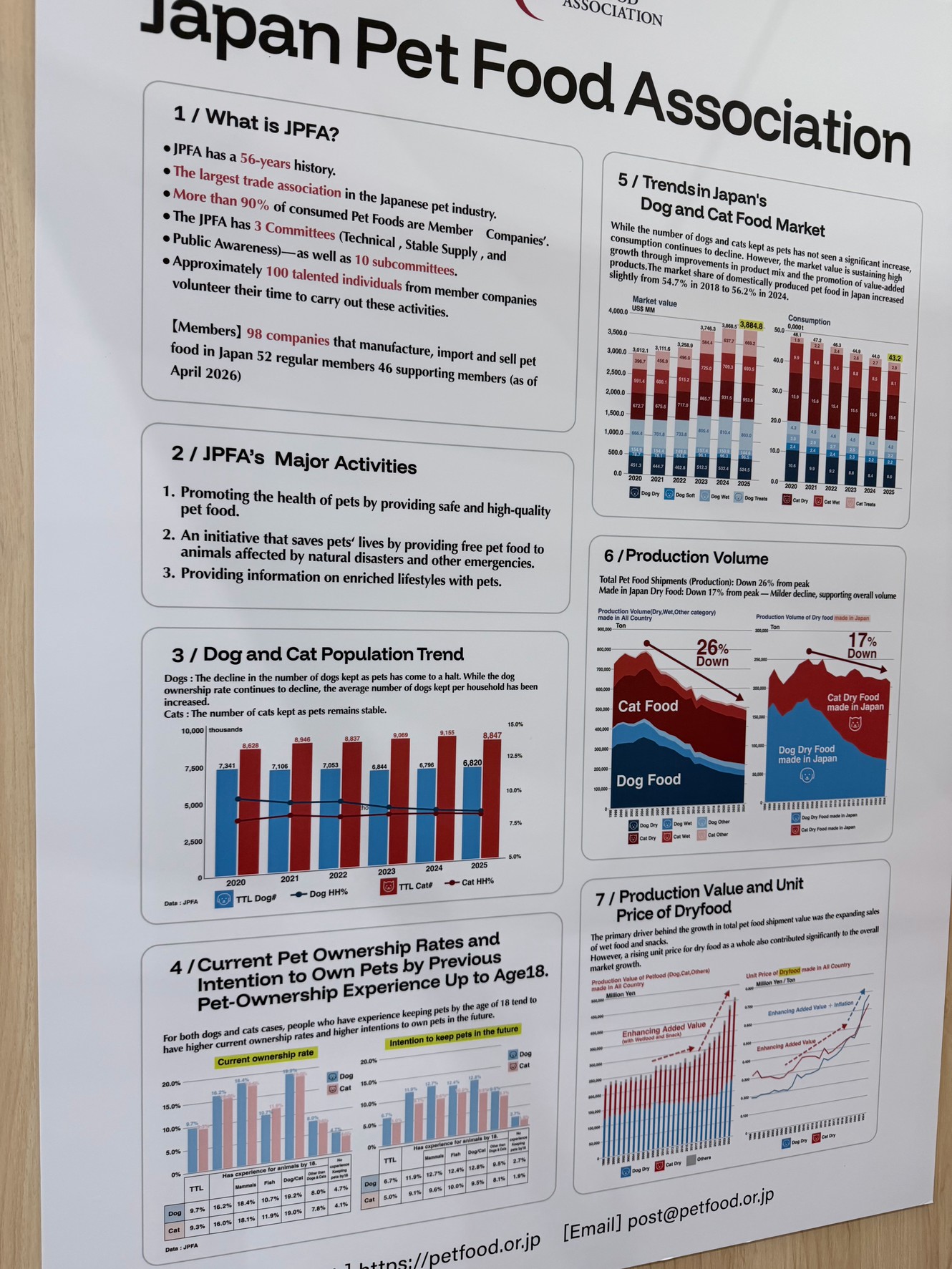
Japan is one of Asia’s most mature pet industry markets, and its development trajectory and consumer trends offer highly valuable reference points for pet owners and industry professionals in Taiwan. Understanding the meaning behind the data can help us provide better care for our beloved animal companions.
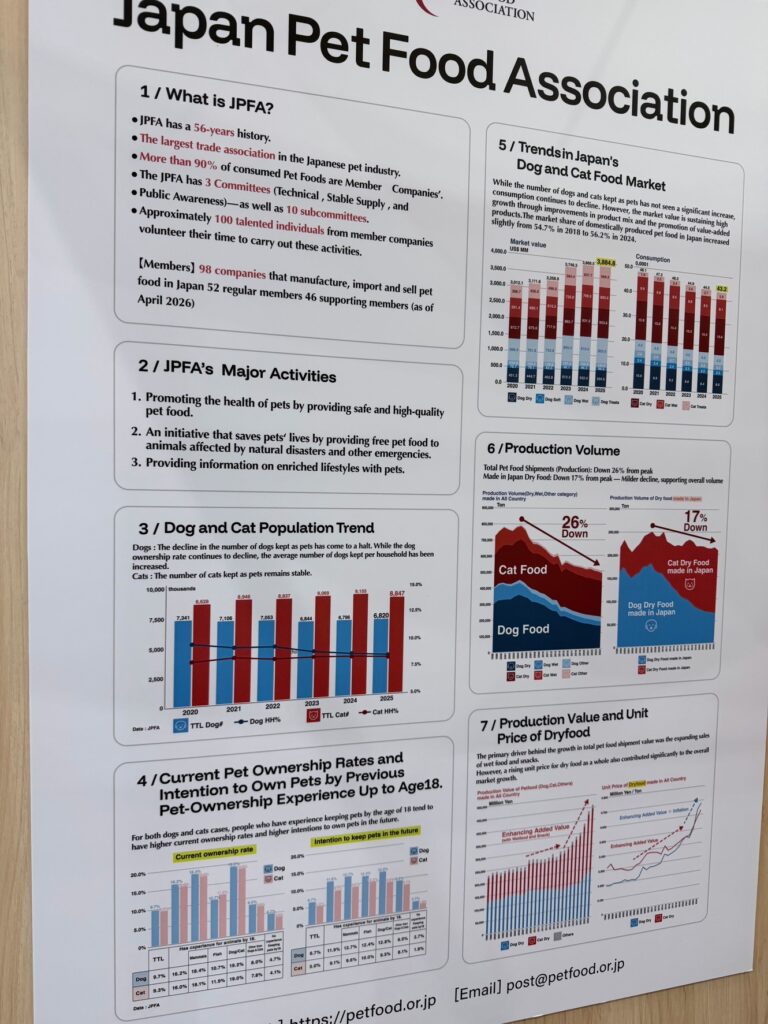
Reading the Data: Key Indicators of Japan’s Pet Market
The chart above presents several core metrics from Japan’s pet market. Here is a breakdown of what each indicator means:
- Market size surpassing several trillion yen: The figures shown indicate that Japan’s overall pet-related industry output continues to expand, spanning food, veterinary care, supplies, grooming, and insurance. This reflects a sustained increase in total consumer spending on pet care.
- Combined dog and cat population exceeding 15 million: The bar or line graph data for the combined dog and cat population illustrates that dog numbers have declined slightly in recent years while cat numbers continue to rise—an overall “cat-ification” trend closely tied to urbanization and smaller living spaces.
- Pet population surpassing the number of children under 15: This is the most striking comparison in the chart. It vividly illustrates how, in an aging society with declining birth rates, pets have effectively taken on the role of family members for many households—further driving demand for higher-quality veterinary care and wellness services.
- Annual growth trend in pet insurance enrollment: The steadily rising insurance enrollment curve reflects growing risk awareness among pet owners. It has also indirectly encouraged animal hospitals to offer more advanced diagnostic and treatment options, creating a positive feedback loop.
- Growth rates across functional food categories: Categories such as joint support, gut probiotics, and kidney-supportive formulas all show double-digit percentage growth, indicating that precision nutrition has moved beyond a niche market and into mainstream consumer behavior.
The Scale and Current State of Japan’s Pet Market
According to recent statistics, Japan’s pet-related market has surpassed several trillion yen in total value, with the combined dog and cat population exceeding 15 million. In certain age demographics, the number of pets has even surpassed the number of children under the age of 15. This figure not only reflects structural changes brought about by an aging, low-birth-rate society, but also signals the firmly established status of pets as true family members in modern households. From an industry perspective, Japan’s pet market has become highly segmented, with fully developed vertical supply chains across pet food manufacturing, veterinary medicine, pet insurance, grooming services, pet boarding, and even pet funeral services. Each segment is supported by specialized regulations and quality standards, making the overall industry ecosystem remarkably mature.
A Shift in Consumer Priorities: From “Keeping Pets” to “Companion Healthcare”
The spending focus of Japan’s pet market has shifted dramatically away from basic food and supplies toward medical care and preventive health. Pet insurance enrollment rates climb year after year, and demand for specialist services—including oncology treatment, physical rehabilitation, and dental surgery for senior pets—has grown significantly. On the industry structure side, Japan has seen a trend of large veterinary medical groups acquiring regional clinics, delivering a more consistent care experience for owners through standardized procedures and cross-facility referral networks. This closely mirrors recent trends in Taiwan, where pet owners increasingly demand higher standards of veterinary care and are more willing to invest the resources needed to meet them. Taiwanese animal hospitals are likewise gradually moving toward subspecialty medicine and chain-model operations.
The Rise of Functional Foods and Precision Nutrition
In Japan, sales of functional pet foods designed for specific life stages or health needs have seen remarkable growth. Categories including joint support, gut probiotics, and kidney-supportive formulas are all posting double-digit gains. From a scientific and industry knowledge standpoint, this boom in functional pet food is rooted in advances in veterinary nutritional research. For example, the anti-inflammatory benefits of omega-3 fatty acids for canine and feline arthritis, the mechanisms by which prebiotics and probiotics regulate gut microbiota, and the disease-slowing effects of phosphorus-restricted, low-protein diets on chronic kidney disease are all well-supported by academic literature—and have been translated into evidence-based commercial products. This serves as an important reminder for pet owners in Taiwan: your pet’s diet should not follow a one-size-fits-all approach. Instead, it should be adjusted according to age, body weight, and health status, with regular consultations with a veterinarian. Working with a board-certified veterinary nutritionist to develop a personalized diet plan represents a significant growth opportunity for Taiwan’s pet market going forward.
Growing Preventive Care Awareness: Routine Health Screenings Become the New Normal
In Japan, taking pets in for comprehensive wellness exams on a regular basis has become standard practice among pet owners. Some animal hospitals even offer annual membership health screening programs that integrate blood panels, diagnostic imaging, and dental evaluations. Looking at this from a broader industry development perspective, the widespread adoption of preventive medicine has not only improved pets’ healthy lifespans, but has also driven market demand for in-vitro diagnostic equipment, ultrasound systems, and digital X-ray technology, as well as the commercialization of emerging services such as biomarker testing and genetic screening. Early detection and early intervention remain the most effective strategies for extending a pet’s healthy years—a principle well worth embracing among Taiwan’s pet owners. Taiwanese animal hospitals should also continue investing in diagnostic equipment and professional talent development to meet the ever-rising expectations of today’s pet owners.
Insights for Pet Owners in Taiwan
Japan’s experience as a mature pet market teaches us that genuine “love” for our pets goes far beyond offering tasty food and fun toys—it means building a systematic approach to health management. From a broader industry perspective, Taiwan’s pet market is currently at a pivotal stage of rapid growth and transformation. Whether it is deepening pet owner education, cultivating specialist veterinary talent, refining the pet insurance framework, or keeping regulations current, all of these elements form an essential foundation for the industry’s sustainable long-term development. Routine health check-ups, age-appropriate nutrition, and timely veterinary care are the true keys to a long and happy life alongside your pet. As Taiwan’s standard of veterinary medicine continues to rise, pet owners should grow their own health literacy in tandem—together creating a better quality of life for the animals we love.
The content of this article is intended for general educational purposes only. If your pet shows any signs of a health concern, please consult a licensed veterinarian as soon as possible for an accurate diagnosis and appropriate treatment recommendations.